Choosing Material for Custom Bags
Choosing Material for Custom Bags
Choose material for appearance, handling, care and construction. A presentation pouch and a laundry bag can need different fabrics. Compare samples and written specifications rather than treating a photograph or fabric name as complete information.
Discuss your bag requirement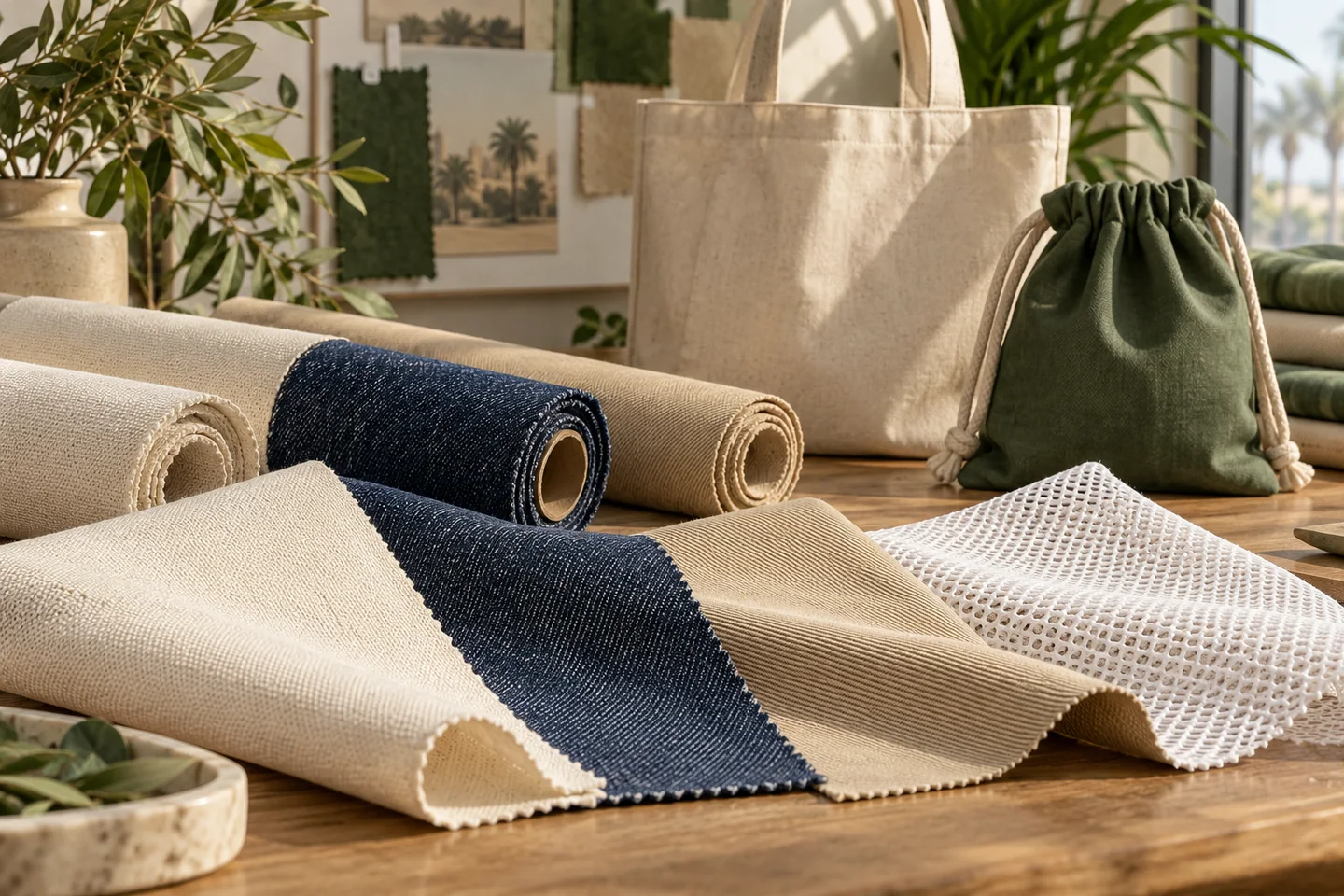
Fibre and construction
Cotton and polyester are fibres; canvas and mesh describe constructions with potentially different compositions. Denim, drill and Oxford also need further detail. Ask for composition, weight, finish and shades. Heavy fabric is not automatically a stronger bag because seams, handles, closures and contents distribution matter. Review the finished construction as well as the material sample.
Branding compatibility
Smooth panels support different printing results from mesh or textured cloth. Embroidery needs stability and suitable access. Review logo dimensions with the fabric, particularly small text and detailed graphics. For coatings, assess heat and printing compatibility rather than assuming it. Keep an approved branding sample with the fabric reference when finish is important to the order.
Care and storage
Explain whether use is occasional presentation or repeated operational handling. Fibres, coatings and trims may require different cleaning. Do not infer washability from fibre alone. Discuss colour-transfer checks for pale garments or valuable contents. Store samples away from moisture and sunlight to preserve a useful reference. Agree any cleaning trial before committing to the complete quantity.
Evidence for claims
Water resistance, waterproof construction, load capacity and recycled content require specifications or evidence for the actual product. Coated fabric does not prove that seams prevent water entry. Reusable bags should not be called certified or environmentally superior without support. Request documentation for procurement-critical claims, and distinguish a proposed requirement from performance already confirmed for the selected bag.
Compare fairly
Identify family, material, quantity, shade, size, branding and UAE destination. Keep other details consistent when comparing alternatives. Ask what is confirmed and what needs sampling or supplier checks. Exact GSM, colour consistency, minimum quantities, availability and timing depend on written quotation. Record the chosen material and any approved alternative to avoid ambiguity during a repeat order.
If several fabric options are being sampled, label each with its proposed composition and weight. Record observations against the correct sample so appearance, feel and cleaning results are not mixed between alternatives.
Before requesting a quotation
- Intended use
- Composition and weight
- Physical reference
- Branding compatibility
- Performance evidence